

The Forgotten Lady of Lismore Castle: The Extraordinary Life of Adele Astaire
How Broadway’s brightest star quietly left her mark on one of Ireland’s most beautiful castles
This guest post was written by Sarah O’Fogarty of Historical Homes, who shares her passion for Ireland’s historic houses, heritage, and stories from the past.
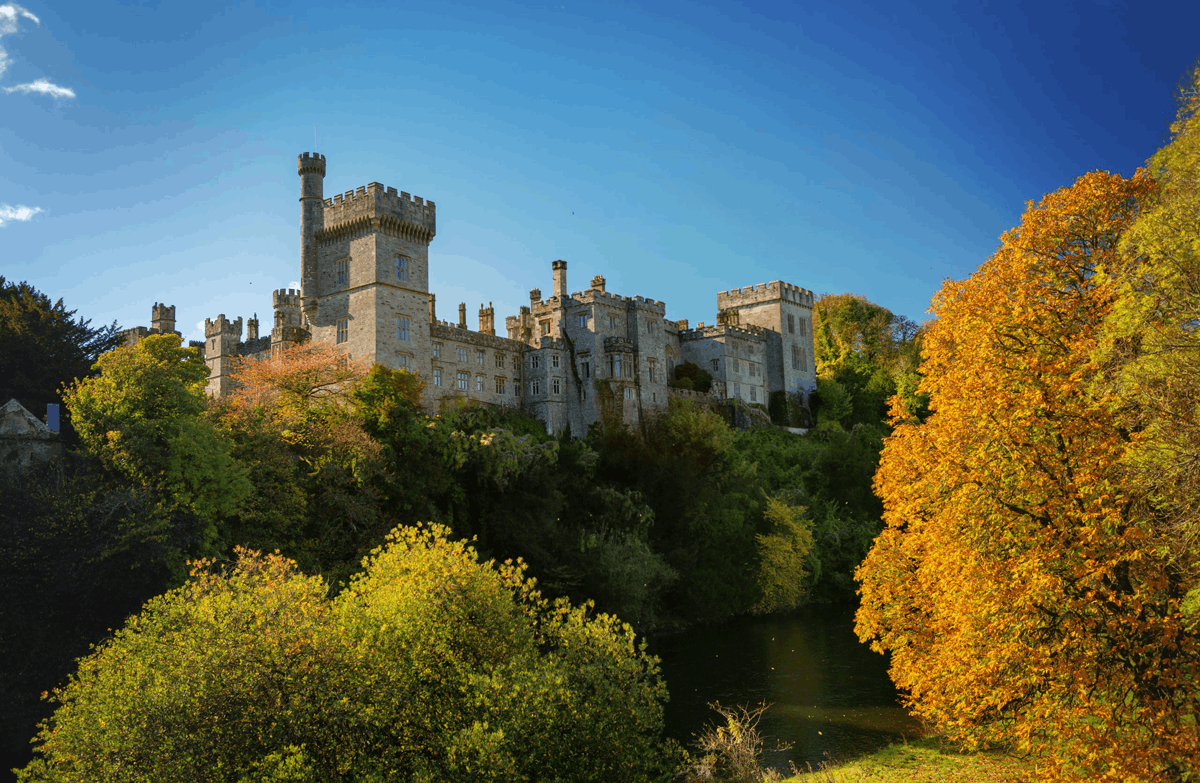
There are castles that impress with their grandeur, and there are castles that quietly hold remarkable stories within their walls. Rising above the River Blackwater in County Waterford, Lismore Castle is one of Ireland’s most beautiful historic estates. Visitors admire its towers, gardens and breathtaking setting, yet few realise that behind its stone walls lived one of the brightest stars of Broadway—Adele Astaire.
When I recently visited Lismore Castle and its Heritage Centre, I expected to learn about its architecture and aristocratic history. Instead, I found myself captivated by the extraordinary life of a woman whose story deserves to be remembered.
Her name was Adele Astaire.
Before Fred Astaire…
Mention the name Astaire and most people immediately think of Fred Astaire, one of Hollywood’s greatest dancers.
Yet before Fred became a film legend, he performed alongside his older sister, Adele Astaire. Throughout the 1920s, the pair became one of Broadway’s greatest partnerships, starring in productions such as Lady, Be Good!, Funny Face and The Band Wagon. Many critics believed Adele was the true star of the duo, admired for her effortless dancing, humour and magnetic stage presence.
She was more than an entertainer; she was a style icon. With her elegant bob hairstyle, sophisticated fashion and infectious personality, Adele embodied everything we now associate with the glamour of the Roaring Twenties. Long before The Great Gatsby became shorthand for Jazz Age elegance, Adele was already living it.
Then, at the height of her fame, she did something almost unimaginable.
She walked away.
From Broadway to the Blackwater
In 1932, Adele retired from the stage to marry Lord Charles Cavendish, the second son of the 9th Duke of Devonshire. Charles was an English aristocrat who preferred tweed and country life to theatrical glamour. Adele was drawn to his warmth, humour and apparent lack of pretension. In choosing Charles, she effectively chose tweed over tuxedos—and her life changed forever, carrying her from Broadway to the banks of the River Blackwater.
Following their marriage, Charles and Adele made Lismore Castle their Irish home. Imagine that journey.
One month, she was standing beneath the bright lights of Broadway. The next, she was crossing the threshold of one of Ireland’s oldest castles, overlooking the peaceful River Blackwater. It was a remarkable change of scenery.
Yet rather than simply adapting to life at Lismore, Adele quietly helped shape its next chapter.
The Woman Who Modernised a Medieval Castle
One of my favourite stories about Adele is that she didn’t try to change the soul of Lismore Castle. She simply made it more comfortable to live in.
The castle had changed little since the nineteenth century, so Adele introduced modern bathrooms and practical improvements while respecting its historic character.
Her influence became so well known that a famous saying emerged:
“King John built the castle, but Adele Astaire plumbed it” (source: The Irish Times). It perfectly captures her legacy. She wasn’t remembered for conquering the castle. She was remembered for making it a home.
A Little Piece of California in County Waterford
While exploring the gardens, I came across what appeared to be an elegant rectangular lawn. At first glance, it looked like another beautifully maintained garden space. It wasn’t until I discovered the story behind it that I realised I was standing beside one of Adele’s most fascinating additions.
Hidden beneath the grass lies the site of Adele Astaire’s California-style outdoor swimming pool, built during the 1930s.
Today the pool is covered over, but it is still marked on the official garden map as the Old Swimming Pool—a quiet reminder of the Hollywood glamour she brought to Lismore (source: Lismore Castle Arts). I couldn’t help smiling.
Only Adele Astaire could think to bring a Californian swimming pool to an Irish castle.
A Life of Joy and Heartbreak
Behind the glamour was a life marked by profound sadness. Adele and Charles endured the devastating loss of three children. Then, in 1944, Charles died at the age of 38.
Despite these devastating losses, Adele’s affection for Lismore never faded. Even after returning to America following her second marriage, she continued to spend part of each year at the castle she loved until late in her life (source: The Irish Times).
When Adele died in 1981, some of her ashes were brought back to Lismore, where Charles and their children were remembered.
In many ways… A part of Adele never truly left Ireland (source: Irish Independent).
Walking in Adele’s Footsteps
During my visit to Lismore, I found myself searching for traces of Adele. Her portrait hangs proudly within the Heritage Centre. Her story is acknowledged alongside those of Fred Astaire and John F. Kennedy.
Yet I couldn’t help wishing there was more.
I searched for books about Adele in the castle café and the Heritage Centre, but couldn’t find any. That surprised me.
For someone who helped shape modern Lismore Castle and her star power, her story feels quieter than it deserves to be. Perhaps that is exactly why it fascinated me.
The Kennedy Connection
Lismore Castle has welcomed many distinguished visitors over the years and had incredible parties.
One of the most famous was John F. Kennedy, who visited before becoming President while spending time with his sister Kathleen (“Kick”) Kennedy, who married William Cavendish, Marquess of Hartington.
Years later, during his presidential visit to Ireland in 1963, Local and published accounts relate that President Kennedy asked for his aircraft to fly over Lismore Castle—a touching tribute to a place filled with family memories (source: The Irish Times). It is remarkable to think that one Irish castle connects the stories of the Devonshires, the Astaires and the Kennedys.
The Film Waiting to Be Made
As I walked through the castle and gardens, I found myself wondering why Adele Astaire’s life has never become a major film. It has everything.
The glamour of Broadway. The excitement of the Roaring Twenties. An unexpected love story. A magnificent Irish castle.
Heartbreak.
Resilience.
Family tragedy.
Hollywood connections.
Fashion. Dance. History.
And one remarkable woman who left behind fame to build a very different life. It is a story that deserves to be rediscovered by a new generation.
Final Thoughts
Long after the music faded from Broadway, Adele Astaire left behind something even more enduring than applause. Hidden within the walls and gardens of Lismore Castle is the quiet legacy of a woman who chose love over fame, Ireland over celebrity, and a medieval castle over the bright lights of New York.
Perhaps it is time her story stepped back into the spotlight.
If You Visit Lismore Castle
- Look for Adele’s portrait in the Lismore Heritage Centre
- Walk to the site of the former Californian swimming pool
- Explore the formal gardens she enjoyed
- Pause on Lismore Bridge for the classic castle view
Written by Sarah O’Fogarty, founder of Historical Homes, where she explores Ireland’s remarkable historic houses, castles, heritage destinations and the stories behind them.
Sources
- Nicola Cassidy, Adele: The Forgotten Sister (Poolbeg Press, historical novel inspired by Adele Astaire’s life).
- Irish Independent – Adele Astaire: The Dancing Queen Who Became Lady of Lismore Castle.
- Irish Independent https://www.independent.ie/entertainment/books/adele-astaire-the-dancing-queen-who-became-lady-of-lismore-castle/a/132958341.html?utm_source=chatgpt.com
- The Irish Times – Meghan Markle’s Flight Is Nothing New: It’s History Repeating Itself (Nicola Cassidy), including Adele’s refurbishment of Lismore and the famous plumbing quotation.
- The Irish Times https://www.irishtimes.com/culture/books/meghan-markle-s-flight-is-nothing-new-it-s-history-repeating-itself-1.4244041?utm_source=chatgpt.com
- The Irish Times – Cutting Edge Castle (history of Lismore Castle and notable visitors).
- The Irish Times https://www.irishtimes.com/life-and-style/cutting-edge-castle-1.479889?utm_source=chatgpt.com
- Official Lismore Castle Gardens Map (showing the location of the Old Swimming Pool built by Adele Astaire).
- https://lismorecastlearts.ie/assets/images/Map_2024_iPAD.pdf?utm_source=chatgpt.com
- Lismore Castle Arts
- Irish Examiner – How Fred Astaire’s Sister Adele Married the Owner of an Irish Castle.
- Irish Examinerhttps://www.irishexaminer.com/lifestyle/arid-30993267.html?utm_source=chatgpt.com
- Cassidy, Nicola, Adele: The Forgotten Sister. Poolbeg Press
Filter by theme