

Popular search
Activities
Places
Trails
Events
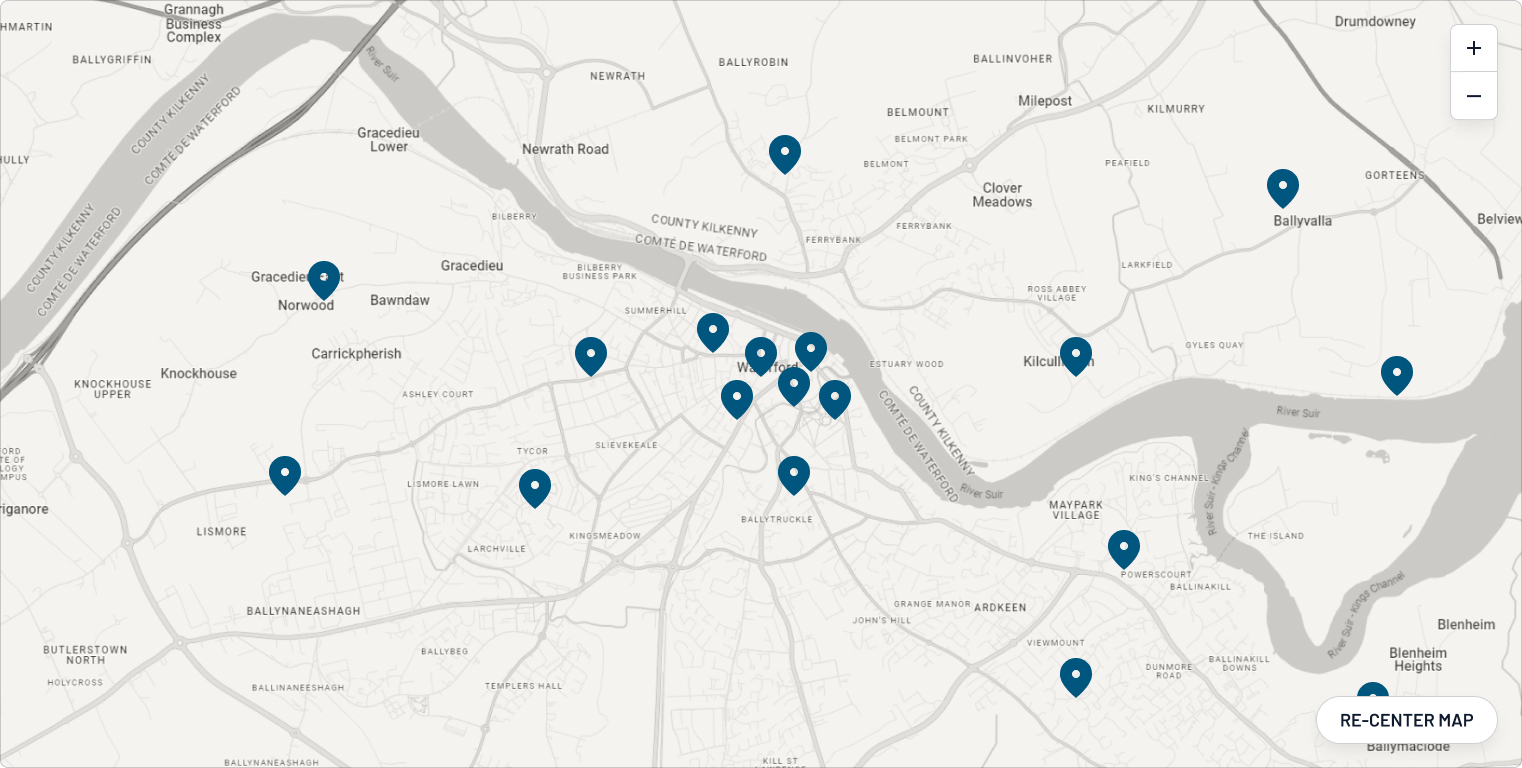
Waterford holds a deeper connection to St. Patrick than many visitors realise. The city’s medieval devotion, Luke Wadding’s influence, and the region’s nearby holy places create a meaningful route for anyone who wants to explore the story of Ireland’s patron saint. This itinerary draws together heritage, pilgrimage and quiet reflection, shaped by the places where Patrick’s legacy touched Waterford and the wider southeast.
Begin your day in the heart of historic Waterford. St. Patrick’s Gateway, once the medieval Church of St. Patrick, served its own parish and was one of the earliest places in the city to bear the saint’s name. Today it functions as a cultural venue yet still carries the atmosphere of its origins.
Step inside to pause, breathe and reflect on how early Christianity shaped Waterford. The medieval devotion to Patrick here mirrors a broader pattern seen across Ireland, where parish churches dedicated to him became expressions of local faith long before later reforms.
Did you know?
Churches named for Patrick often represented some of the earliest community based expressions of devotion outside the monastic tradition.
A short walk brings you to Greyfriars where a bronze statue of Luke Wadding stands in quiet tribute. Born in Waterford in 1588, Wadding became a Franciscan scholar in Rome and was instrumental in securing 17 March as a feast day in the universal Church calendar. Without him the celebration of St. Patrick’s Day across the world might look very different.
His work linked Waterford with one of Ireland’s most recognisable traditions and places the city at the centre of Patrick’s international story.
Did you know?
The first official St. Patrick’s parade in the world was held in Waterford in 1903.
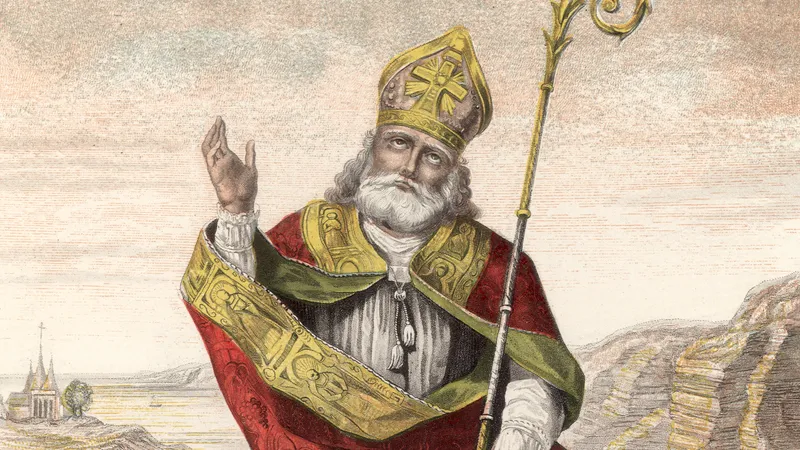
Inside the older Council Chamber of City Hall visitors will find a nineteenth century brass plaque depicting Patrick with crozier and shamrock. Civic buildings of the past often displayed religious motifs that reflected community identity, pride and local tradition. This plaque forms part of that history and adds another layer to Waterford’s connection with the saint.
From the city centre it is a short walk or drive to the parish church in Ballybricken. Here stained glass windows depict Patrick in vivid colour and the interior holds painted stations and icons that reflect a strong devotional tradition. This church continues a living link to Patrick in the everyday spiritual life of Waterford people.
Continue about twenty minutes to Portlaw where a historic parish church stands as another testament to the region’s devotion. This rural setting offers a different sense of Patrick’s legacy. It reveals how communities far beyond the city have carried his story from one generation to the next.
Portlaw also works as a natural midpoint in the journey before travellers continue towards the most atmospheric stop of the day.
Although located just across the border in County Tipperary, St. Patrick’s Well is deeply connected to the heritage of the southeast. It is one of Ireland’s largest and most striking holy wells and has long been associated with Patrick’s early ministry.
The site features:
A clear spring emerging from rock
A small medieval chapel set into the landscape
A cross slab that tradition links directly to Patrick
Legends that claim the saint baptised converts here
The well sits in a sheltered valley where running water, soft birdsong and ancient stone work together to create a sense of calm. Visitors are encouraged to walk slowly and allow the place to settle around them. It is often considered a highlight for anyone seeking a reflective or pilgrimage style experience.
For visitors who enjoy scholarly insights or visual heritage, Waterford Treasures holds early maps by Homann Heirs that show Christian sites across Waterford. One map includes a reference to St. Declan welcoming St Patrick to Ardmore. These pieces help to place Patrick within the broader network of early saints and settlements in the region.
Although Ardmore is not a Patrick site, it provides important context. St Declan’s monastery predated Patrick’s mission and some traditions suggest they may have encountered one another. For those willing to travel further this coastal stop adds depth to the understanding of early Irish Christianity.
End the day at Ireland’s oldest Catholic cathedral. The evening light often fills the interior in warm tones and invites quiet reflection. Here visitors can take a final moment to consider Patrick’s legacy seen through art, architecture and silence.
This cathedral brings the journey full circle. It connects medieval devotion, early parish life, Luke Wadding’s influence and the living tradition of Patrick that continues in Waterford today.